The ACM Journal
Beyond the Big Stone: The Details Defining Engagement Rings Now
A jeweler’s guide to 2026 engagement ring trends: yellow gold, sculptural settings, antique cuts, bezels, three-stone designs, and low profiles.
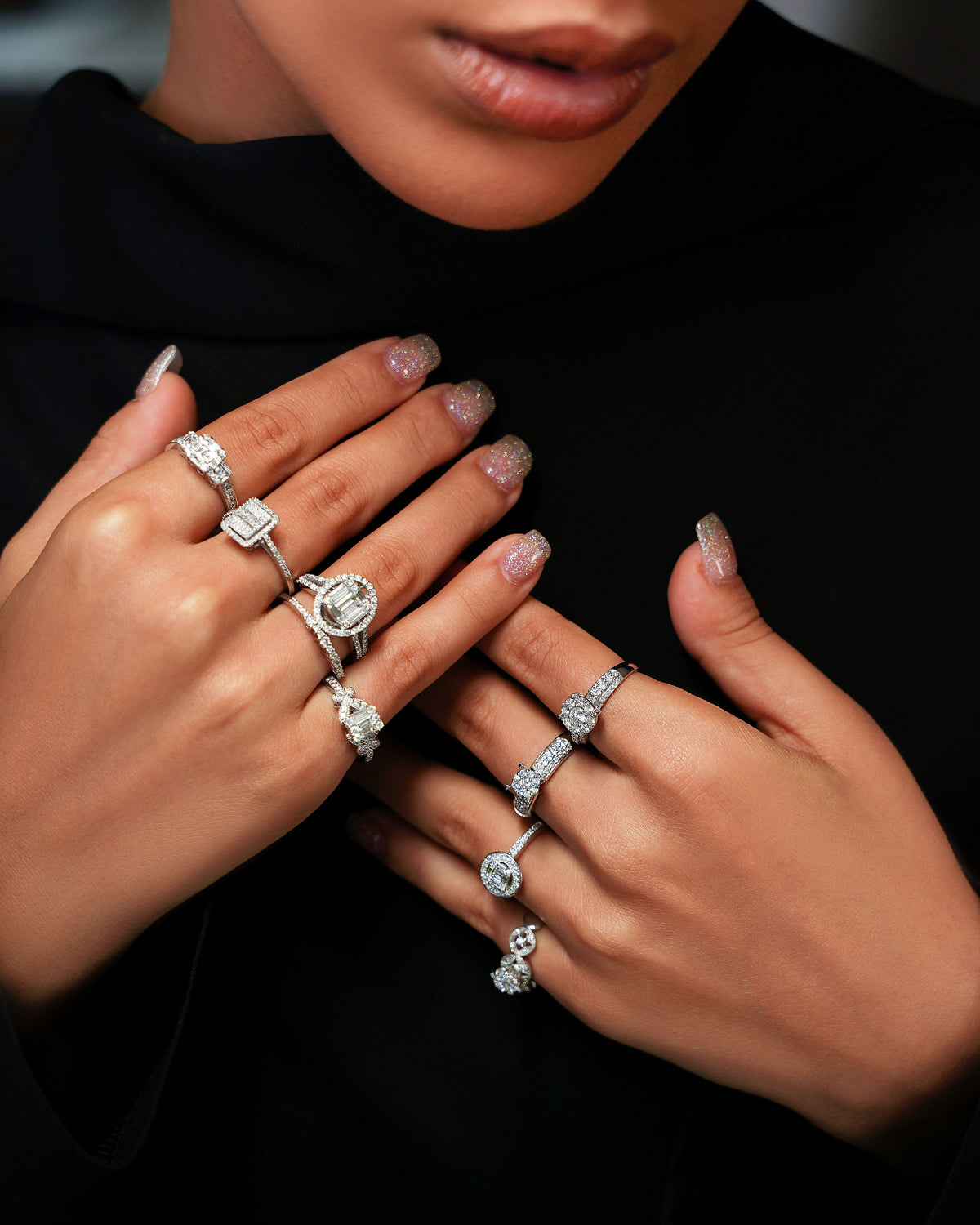
The strongest engagement-ring direction in 2026 is not one shape or setting—it is specificity. Couples are pairing warmer yellow gold, more substantial or sculptural settings, antique-inspired cuts, bezels, three-stone compositions, and personal hidden details with designs made for real daily wear. Character is becoming more valuable than size alone.
What matters most
- Personal design is the real macro trend: The Knot reports that 88% of couples made custom edits or fully custom-designed a ring.
- Yellow gold, architectural settings, antique references, and interesting stone orientation are giving classic forms more identity.
- The lasting version of any trend fits the wearer’s hand, wardrobe, work, and tolerance for maintenance.
The mood: recognizable, but not repeatable
A few years of increasingly accessible large lab-grown diamonds changed the visual baseline of an engagement ring. Size can still be beautiful, but it no longer does all the work of signaling distinction. The more interesting question now is: what makes this ring unmistakably hers?
That shift appears in the data. The Knot’s 2026 study found that 88% of couples made custom edits or fully custom-designed their ring. The strongest designs we see take a familiar idea—a solitaire, three-stone ring, or halo—and make one or two deeply considered changes rather than stacking every trend into a single piece.
1. Yellow gold is doing more than adding warmth
Yellow gold was the leading engagement-ring metal in The Knot’s 2026 study, selected by 39% of couples and up sharply over five years. Its appeal is more than nostalgia. Warm metal gives contrast to a white diamond, works beautifully with stones that carry a touch of warmth, and makes the band itself part of the composition.
The current version often has presence: a softly rounded band, a tapered shank, or a bolder bezel rather than an almost invisible thread of metal. For shoppers drawn to white metal, platinum and white gold remain enduring; the decision should follow skin tone, wardrobe, maintenance preferences, and the design—not a forecast.
2. Settings are becoming more architectural
Sculptural galleries, wider bands, split shanks, bezel frames, and softly substantial shoulders are giving rings an identity from every angle. This is good news for custom design because architecture can add character without requiring a larger or rarer center stone.
A substantial setting should still feel refined. The bench work matters: balanced weight, a comfortable underside, clean transitions, secure stone contact, and proportions that look intentional from the top and side. “Chunky” is a visual idea; comfort and longevity are engineering questions.
3. Antique influence is replacing costume-like vintage
Antique-inspired does not need to mean copying a period ring. Elongated cushions, old-mine-style faceting, fine milgrain, engraving, and softened geometric shapes can bring depth to a clean modern setting. Natural Diamond Council sales reporting also highlighted characterful cuts, heritage references, and individualized design choices across 2025.
The most enduring approach borrows one vocabulary and speaks it fluently. An antique-cut center with an unfussy gold band can feel more convincing than combining engraving, a halo, multiple stone shapes, and several eras at once.
4. Three-stone and east–west compositions are gaining personality
A three-stone ring creates room for contrast: tapered baguettes beside an emerald cut, pears framing an oval, or a colored gem paired with diamonds. An east–west orientation turns an elongated stone horizontally, changing the silhouette without changing the stone itself.
Both ideas work best when the composition is designed as a whole. Side-stone angles, table heights, prong placement, wedding-band fit, and total finger coverage should be resolved together in the drawing and CAD—not improvised after a center stone is purchased.
5. Low profiles and bezels reflect real life
More couples are asking for rings that snag less, sit closer to the hand, and feel secure during an ordinary Tuesday. Bezel and partial-bezel settings answer that need while creating a crisp frame around the stone. Cathedral shoulders and well-designed baskets can also add support without making a ring feel heavy.
Low is not always better: wedding-band clearance, cleaning access, light behavior, and finger shape all affect the right profile. Bring the daily routine into the consultation—gloves, gym, healthcare work, childcare, travel—and let function guide the final millimeters.
6. Private details are becoming the true luxury
A hidden birthstone, an engraved date, a motif drawn from a family piece, or a detail only visible from the side gives the ring meaning that cannot be compared on a product grid. These choices rarely shout, which is precisely why they feel personal.
Our favorite question is not “What is trending?” but “What should still feel true in twenty years?” Use the trends to discover a direction, then remove anything that does not belong to the wearer’s story.
How to make a trend your own
Save two or three images and note the exact detail you like in each—the band width, side profile, stone orientation, texture, or mood. Add what you do not like. Bring a target date, budget range, and ring size if you know it. That is enough to begin.
At ACM, the first sketches and refinements happen before you commit. We can compare stone options with our gemology partners, model the ring in CAD, and adjust the design until it feels specific rather than fashionable for fashion’s sake.
Common questions
Before you decide
What engagement ring shape is most popular in 2026?
Round and oval remain the most widely selected shapes in major consumer studies, but marquise, emerald, pear, elongated cushion, and antique-inspired cuts are gaining attention for their distinctive silhouettes.
Is yellow gold still in style?
Yes. Yellow gold continues to grow in engagement rings, and its warmth works particularly well with white diamonds, warmer natural stones, and vintage-inspired details.
Are bezel settings a passing trend?
Bezels have a long history and offer practical stone protection. Their current popularity may fluctuate, but a well-proportioned bezel chosen for the wearer’s lifestyle can be genuinely timeless.
How long does a custom ACM ring take?
A standard timeline is about three to four weeks after CAD approval. Rush and economy timelines may be available depending on the design.
Sources & editorial notes
We use current industry and consumer research as context, then write for the real decisions ACM clients bring to the table. Sources were reviewed September 2, 2026.
Let’s make the next decision feel easy.
Bring a budget range, a target date, and two or three inspiration photos. ACM will help you refine the design and understand every trade-off before you commit.
Let’s make the next decision feel easy.
Bring a budget range, a target date, and two or three inspiration photos. ACM will help you compare options and understand every trade-off before you commit.
Book a free consultation