The ACM Journal
Reset, Restore, or Redesign? A Guide to Giving Heirloom Jewelry New Life
How to decide whether inherited jewelry should be restored, reset, redesigned, or valued—and what a careful jeweler evaluates before making changes.
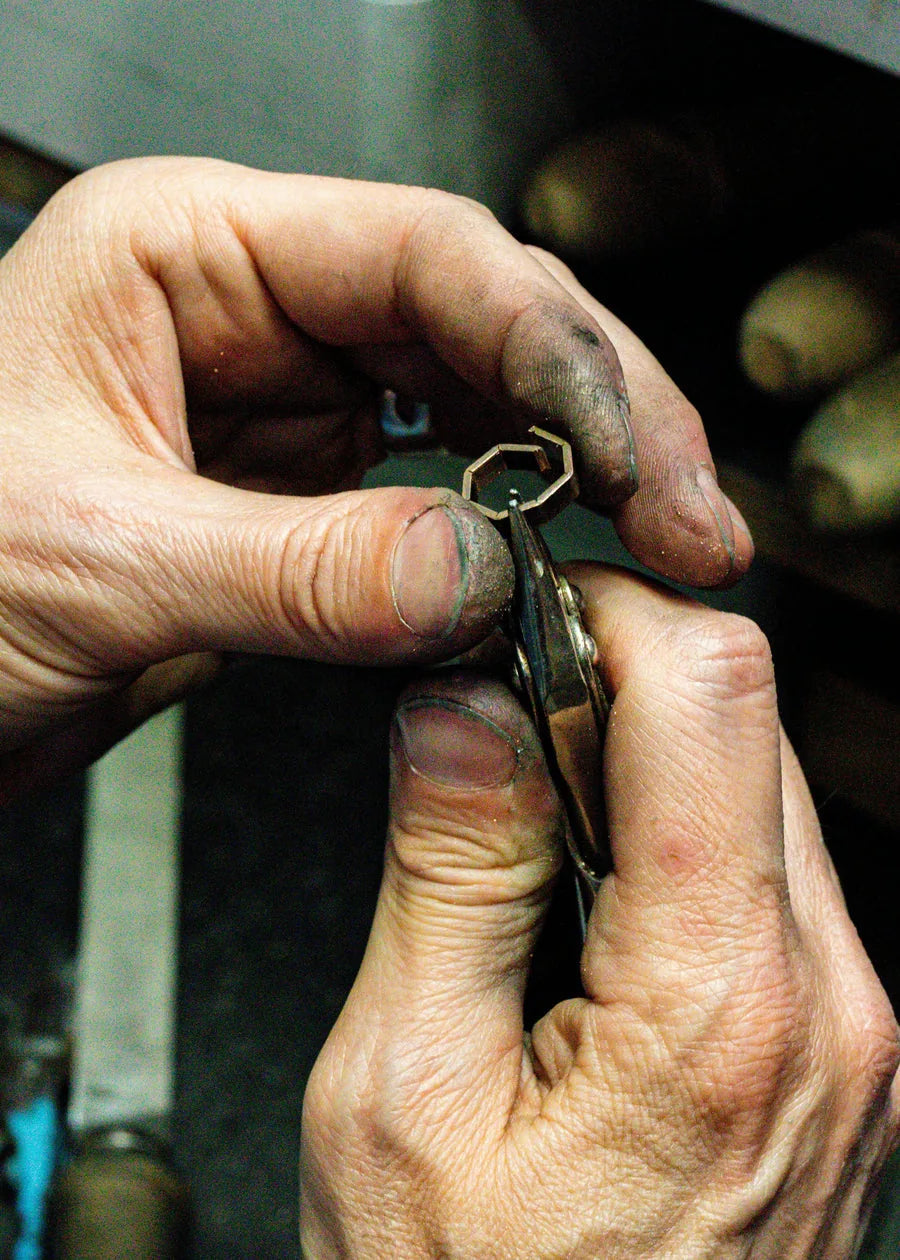
Restore an heirloom when its original design matters and the structure can be repaired safely. Reset the stones when you want a new wearable setting but wish to preserve the gems. Redesign when several pieces, an impractical style, or damaged components call for a fresh composition. Value or sell only after documenting the piece and separating emotional, gem, and metal value.
What matters most
- Document and inspect an heirloom before cleaning, polishing, dismantling, or valuing it.
- Stones are often reusable after inspection; old metal may be credited and refined rather than melted directly into a new setting.
- The best redesign preserves the part of the story that matters while making the piece safe and natural to wear now.
Why this conversation is happening now
Record gold prices have made forgotten jewelry financially visible again. At the same time, buyers are choosing personal design over another mass-produced piece. A 2026 Jewel360 survey of independent jewelry stores reported that 90% were seeing more custom requests, and that much of the work involved remaking jewelry clients already owned.
That does not mean every inherited piece should be melted. Some deserve conservation. Some hold more emotional value than material value. Some contain a beautiful stone in a setting that no longer fits a modern life. The first service a trusted jeweler provides is helping separate those questions before any irreversible work begins.
Begin with the story, then inspect the object
Before a piece goes under magnification, write down what you know: who wore it, approximate age, original photographs, family inscriptions, prior repairs, and any grading reports or appraisals. Photograph the piece from every angle. If ownership or family expectations are complicated, settle those conversations before changing it.
Then the physical evaluation begins. A jeweler should check hallmarks, metal condition, solder seams, prong wear, stone security, chips, abrasions, treatments, and whether an older gem can tolerate cleaning, heat, or resetting. “It looks fine” is not an inspection.
Restore when the original design is the heirloom
Choose restoration when the silhouette, hand engraving, craftsmanship, or historical integrity is what you most want to preserve. Work might include rebuilding worn prongs, replacing a missing accent, reinforcing a shank, matching old-cut stones, or carefully refreshing the finish.
A thoughtful restoration does not polish away every sign of age. Patina, engraving depth, and tiny hand-made irregularities may be part of the piece’s character. Ask which marks are damage and which are history before authorizing refinishing.
Reset when the stones should lead a new life
Resetting keeps one or more stones and gives them a new setting. It is often the cleanest choice when a center diamond or gemstone matters deeply but the original ring is too fragile, sits too high, does not fit the wearer’s style, or cannot be resized safely.
Not every stone is a candidate. Emeralds, opals, pearls, and other materials require different handling from diamonds; even a diamond can have a chip or cleavage risk that changes the safest prong placement. The design must follow the actual condition and dimensions of the stone, not a generic catalog rendering.
Redesign when the story is larger than one piece
A redesign can bring stones from several family pieces into one ring, pendant, bracelet, or set of sibling keepsakes. It can echo the curve of an original setting, preserve a small engraved panel, or translate a motif into a completely new form.
The discipline is knowing what not to carry forward. Pick one anchor—an important stone, engraving, proportion, or memory—and let the new design support it. Trying to use every stone and every symbol can make a piece difficult to wear and harder to understand.
Keep
the element with irreplaceable emotional or historical meaning.
Adapt
the features that can be made safer, more comfortable, or more consistent with the new wearer.
Release
damaged, low-value, or distracting elements that prevent the new piece from feeling coherent.
What happens to the old gold?
Clients often imagine melting the exact ring and pouring it directly into a new one. Sometimes old metal can be incorporated, but direct reuse may create problems because the alloy is unknown, solder and contamination may be present, and repeated heating can affect workability. For a technically demanding new setting, fresh, known-alloy metal can be the safer path.
That does not mean the old gold loses value. It can be tested, weighed, and credited toward the project or refined through an appropriate process. With gold prices elevated, a transparent valuation matters. Ask for the weight, purity testing method, rate used, and how any credit appears in the estimate.
The ACM heirloom process
We start with a no-pressure conversation and document what you want to protect. Our bench team evaluates the piece before we recommend repair, restoration, or a new design. If redesign is right, the path follows the same care as any bespoke commission: concept, stone review, sketches, estimate, CAD, approval, and hand finishing.
Bring the piece, any paperwork, inspiration images, and the story behind it. You do not need to know the right technical answer. That is what the evaluation is for.
Common questions
Before you decide
Can old diamonds be reused in a new ring?
Often, yes. Each stone should be cleaned and inspected for chips, abrasions, prior damage, and exact dimensions before a new setting is designed.
Can you melt my old gold into the new piece?
Sometimes, but direct reuse is not always the safest technical choice because alloy, solder, and contamination may be unknown. The metal can often be tested and credited even when fresh alloy is recommended.
Will redesigning an heirloom reduce its value?
It may change antique, collector, or provenance value. Document the piece and seek an appropriate appraisal before altering anything that may be rare or historically significant.
What should I bring to an heirloom consultation?
Bring the jewelry, any appraisals or grading reports, old photographs, family history, a budget range, and a few examples of how you would like to wear it now.
Sources & editorial notes
We use current industry and consumer research as context, then write for the real decisions ACM clients bring to the table. Sources were reviewed September 2, 2026.
Let’s give your heirloom a thoughtful next chapter.
Bring the jewelry, any paperwork or old photographs, and the story behind it. ACM will help you understand the safest and most meaningful options before you commit.
Let’s make the next decision feel easy.
Bring a budget range, a target date, and two or three inspiration photos. ACM will help you compare options and understand every trade-off before you commit.
Book a free consultation